How to Improve Streaming Stability and Reduce Buffering
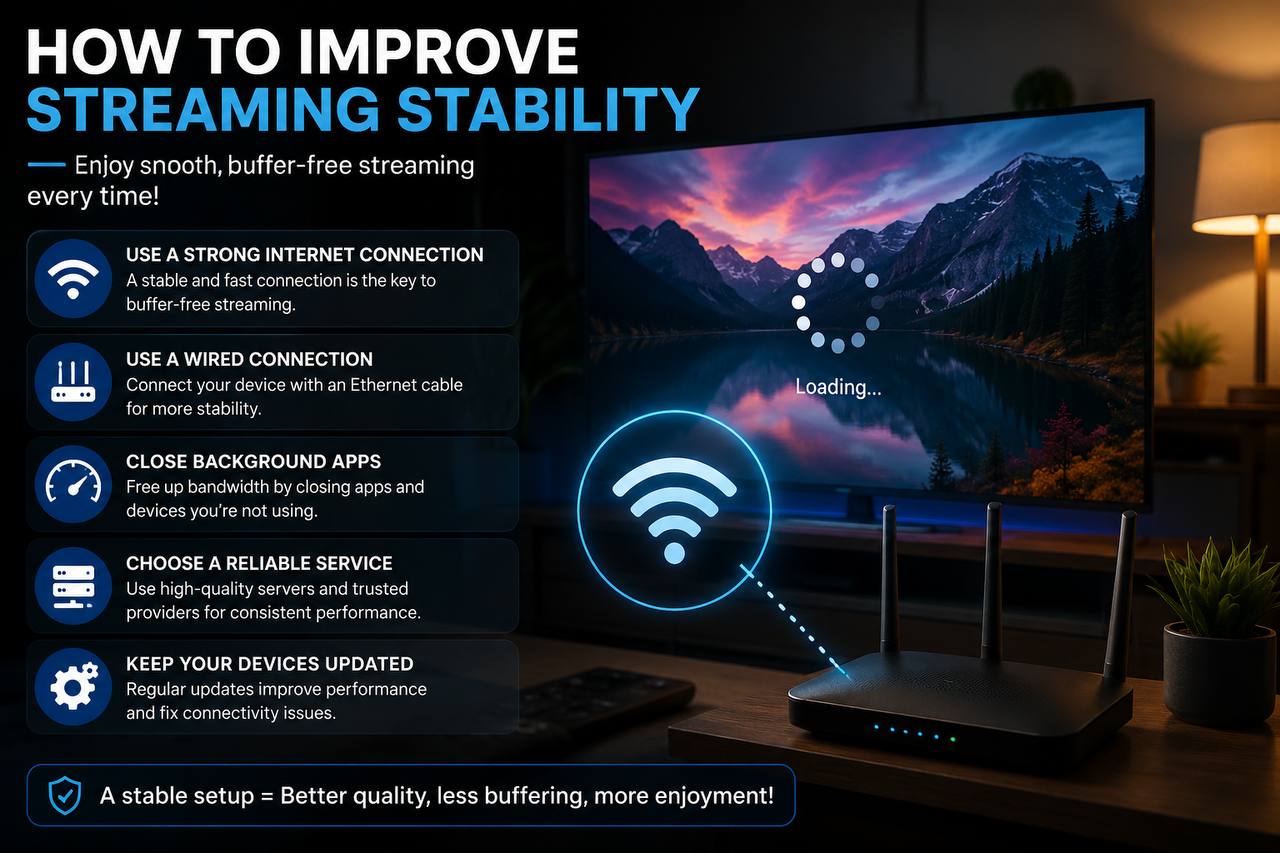
Nothing ruins a movie night faster than a spinning loading icon. When learning How to Improve Streaming Stability, if you live in the United States, you know that consistent video quality is essential for modern entertainment. Many factors affect your connection, ranging from router placement to background app activity.
This guide provides a practical roadmap for anyone looking for reliable playback. We will explore network configurations, Wi-Fi optimization, and device settings that keep your media running smoothly. Learning how to improve streaming stability is the first step toward a frustration-free experience.

Edit
Full screen
Delete
How to Improve Streaming Stability
Our troubleshooting process begins with basic diagnostics to identify your bottleneck when figuring out How to Improve Streaming Stability. From there, we will move into advanced connection tweaks and hardware adjustments. By following these steps, you can ensure your favorite services deliver the high-definition content you expect.
Key Takeaways
- Identify common network bottlenecks affecting your home connection.
- Optimize Wi-Fi signals to prevent signal interference.
- Manage background applications to free up device bandwidth.
- Update firmware to ensure hardware compatibility with modern apps.
- Contact your service provider when local troubleshooting fails.
Why Streaming Buffers and Loses Stability
Identifying the root cause of streaming instability requires distinguishing between momentary pauses and poor image resolution. Many viewers assume that any playback issue is the same, but the technical reasons behind these problems vary significantly. Understanding these differences is the first step toward improving your overall streaming quality.

Edit
Full screen
Delete
streaming quality
How Buffering Differs From Low Streaming Quality
Buffering occurs when your device runs out of data to play, forcing the video to pause while it downloads more content. This is a temporary interruption caused by a gap in the data stream. In contrast, low streaming quality refers to a persistent, grainy, or pixelated image that remains stable but lacks detail.
“The difference between a smooth 4K experience and a pixelated mess often comes down to how your network manages data packets in real-time.”
Common Causes of Playback Interruptions
Several factors can disrupt your connection, ranging from local network traffic to issues with the service provider. To help you diagnose these problems, we have categorized the most frequent culprits in the table below.
| Issue Type | Primary Symptom | Common Cause |
| Bandwidth | Frequent Buffering | Network Congestion |
| Signal | Dropped Frames | Wi-Fi Interference |
| Software | App Crashes | Outdated Firmware |
Insufficient Bandwidth and Network Congestion
When too many devices compete for the same internet connection, your router struggles to prioritize video traffic while learning How to Improve Streaming Stability. This congestion leads to insufficient bandwidth, which prevents the stream from maintaining a high bitrate. Consequently, the player must drop the resolution or pause entirely to catch up.
Weak Wi-Fi Signals and Interference
Physical obstacles like walls, floors, and large furniture can significantly weaken your wireless signal when figuring out How to Improve Streaming Stability. Furthermore, electronic devices such as microwaves or cordless phones often create interference that disrupts the data flow. A weak signal makes it nearly impossible to maintain consistent streaming quality, even if your internet plan is fast.
Device, App, and Service Problems
Sometimes the issue lies within the hardware or software rather than the network itself when learning How to Improve Streaming Stability. An outdated app, a full cache, or a malfunctioning streaming service server can cause playback to fail. If you notice that only one specific platform is failing while others work perfectly, the problem is likely on the service provider’s end.
How to Improve Streaming Stability
When your video starts to stutter, knowing where to begin is the most important step. Many users jump straight to complex network changes, but simple fixes often resolve the issue faster. Learning how to improve streaming stability starts with identifying the most common points of failure.
Start With the Most Likely Source of the Problem
Most playback interruptions originate from the application itself or the hardware being used. Before you adjust your router settings, verify that your streaming device is functioning correctly. Software glitches are frequent culprits that can be cleared with a quick refresh.

Edit
Full screen
Delete
how to improve streaming stability
Follow a Consistent Troubleshooting Sequence
A logical order prevents unnecessary frustration and saves time when learning How to Improve Streaming Stability. Always start with the local playback environment before moving to your internet infrastructure.
Restart the Streaming App and Device
Begin by closing the streaming application completely as part of How to Improve Streaming Stability. If the problem persists, perform a full power cycle on your streaming device, such as a Roku, Apple TV, or smart television. This clears temporary memory and resets the connection to the content server.
Restart the Modem and Router Safely
If the device restart does not work, move to your networking equipment when focusing on How to Improve Streaming Stability. Unplug your modem and router from the power source for at least thirty seconds. This brief pause allows the hardware to clear its cache and re-establish a clean handshake with your internet service provider.
Confirm Whether the Issue Affects One Service or Every Platform
The final diagnostic step is to determine the scope of the problem. Test a different streaming service to see if the buffering is universal. If only one app fails, the issue likely lies with that specific provider’s servers. If every platform experiences lag, you have confirmed a broader network issue, which is the key to knowing how to improve streaming stability effectively.
Test Internet Speed, Latency, and Connection Consistency
To effectively troubleshoot buffering issues and learn How to Improve Streaming Stability, you must look beyond the headline speed advertised by your provider. Many factors influence how data travels from the server to your screen, and a single snapshot of your connection often fails to tell the whole story.
Compare Your Results With the Streaming Service Requirements
Different platforms have specific bandwidth demands for various video qualities. For instance, 4K Ultra HD streaming typically requires a stable connection of at least 25 Mbps, while standard definition content may function well on much lower speeds.
- Check the official support pages for your specific streaming service.
- Compare these minimum requirements against your current test results.
- Ensure your plan provides enough headroom for other devices in your home.
Check Upload Speed, Download Speed, and Latency
While download speed is the most discussed metric, it is not the only factor that matters when learning How to Improve Streaming Stability. You should also monitor your upload speed and latency to properly troubleshoot buffering issues. High latency, often measured as ping, can cause delays in data requests, leading to stuttering playback.
Jitter, or the variation in latency, is equally important for a smooth experience when mastering How to Improve Streaming Stability. If your connection shows high jitter, your video player may struggle to maintain a consistent buffer, even if your raw download speed appears sufficient.
Run Tests During Peak Household Usage
Internet performance often fluctuates based on the time of day when figuring out How to Improve Streaming Stability. Testing your connection during the morning might yield excellent results, but those numbers can drop significantly during evening hours when your neighborhood network is under heavy load.
Try to run your speed tests during the same time you usually experience playback problems while focusing on How to Improve Streaming Stability. This helps you identify if your ISP is struggling to maintain bandwidth during high-traffic periods.
Recognize Unstable Results Even When Average Speed Looks High
Sometimes, a speed test might show a high average number, yet you still face constant interruptions when learning How to Improve Streaming Stability. This often happens because of connection instability, where your speed spikes and dips rapidly rather than staying flat.
If you see a graph during your test, look for a smooth line. A jagged, erratic line indicates that your connection is not stable enough for high-quality streaming while mastering How to Improve Streaming Stability, which makes it harder to troubleshoot buffering issues effectively. Always prioritize consistency over a high peak speed number.
Optimize Wi-Fi for Smoother Video Playback
Achieving a seamless viewing experience when learning How to Improve Streaming Stability often starts with how you manage your wireless environment. Small adjustments to your hardware setup can help you maximize streaming speed and eliminate frustrating interruptions during your favorite shows.
Place the Router for Better Coverage
The physical location of your router is the most important factor for signal strength when figuring out How to Improve Streaming Stability. Place your device in a central, elevated position, such as on a shelf or a table, rather than hiding it inside a cabinet or behind a television.
Walls, floors, and large metal objects can block signals significantly when learning How to Improve Streaming Stability. By keeping the router in an open area, you ensure that the wireless waves travel efficiently to your streaming devices.
Choose the Right Wi-Fi Band
Modern routers offer two primary frequency bands to handle your data traffic when learning How to Improve Streaming Stability. Understanding the strengths of each band allows you to assign your devices to the most appropriate connection.
When to Use the 5 GHz Band
The 5 GHz band is ideal for high-definition video because it supports faster data rates when learning How to Improve Streaming Stability. It is best suited for devices located in the same room as the router, where the signal remains strong and clear.
When the 2.4 GHz Band Is More Reliable
The 2.4 GHz band is better at penetrating walls and traveling over longer distances. If your streaming device is located far from the router, this band provides a more stable connection despite having lower top-end speeds.
| Feature | 2.4 GHz Band | 5 GHz Band |
| Speed | Lower | Higher |
| Range | Longer | Shorter |
| Obstacle Penetration | Excellent | Limited |
| Best Use Case | Distant Rooms | High-Bitrate Video |
Reduce Wireless Interference
Other household electronics, such as microwaves, cordless phones, and baby monitors, can disrupt your Wi-Fi signal when exploring How to Improve Streaming Stability. Try to keep your router away from these devices to prevent signal drops.
Additionally, if you live in an apartment, your neighbors’ Wi-Fi networks might overlap with yours. Using a Wi-Fi analyzer app can help you identify the least crowded channel to maximize streaming speed across your home.
Improve Coverage With a Mesh Wi-Fi System
If your home is large, a single router may not provide enough coverage for every room when learning How to Improve Streaming Stability. A mesh Wi-Fi system uses multiple nodes to create a unified, seamless network throughout your entire living space.
Position Mesh Nodes for Strong Backhaul Connections
The performance of a mesh system depends on how well the nodes communicate with each other when exploring How to Improve Streaming Stability. Place your satellite nodes in locations where they can maintain a strong backhaul connection to the main router.
Avoid placing nodes too far apart, as this forces them to struggle with a weak signal when focusing on How to Improve Streaming Stability. Proper placement ensures that data moves quickly between nodes, providing a consistent experience for all your connected devices.
Improve Router and Home Network Performance
Your router acts as the central nervous system for your home network performance when focusing on How to Improve Streaming Stability. When this device struggles to process data, every connected gadget in your house suffers from lag or buffering. Keeping your hardware in top shape is the most effective way to ensure consistent streaming stability.
Update Router Firmware and Network Equipment
Manufacturers frequently release firmware updates to patch security holes and improve data handling when exploring How to Improve Streaming Stability. These updates often contain critical fixes that resolve known bugs causing connection drops. Check your router’s administrative interface regularly to ensure you are running the latest software version.
Enable Quality of Service Features When Available
Quality of Service (QoS) settings allow you to prioritize specific traffic types over others. By assigning higher priority to your streaming device, you ensure that video data gets the bandwidth it needs first. This feature is a powerful tool for maintaining streaming stability during peak hours when other devices are active.
Replace Outdated or Overloaded Network Hardware
Even a well-maintained router has a limited lifespan when exploring How to Improve Streaming Stability. If your device is more than five years old, it may lack the processing power to handle modern high-definition streams. Upgrading to a newer model often provides a significant boost to your overall home network performance.
Identify Router Heat, Reboots, and Connection Drops
Hardware that feels hot to the touch is often struggling to manage its workload when focusing on How to Improve Streaming Stability. If you notice your router rebooting on its own or dropping connections frequently, it is likely overheating or failing. Ensure the device is placed in a well-ventilated area away from enclosed cabinets to prevent thermal throttling.
Secure the Network Against Unauthorized Devices
Unauthorized devices connected to your Wi-Fi can silently consume your bandwidth. If a neighbor or an unknown device is accessing your network, your available speed for streaming will drop significantly. Use strong, unique passwords and check your router’s client list to remove any devices you do not recognize.
| Maintenance Task | Frequency | Impact on Stability |
| Firmware Updates | Monthly | High |
| QoS Configuration | One-time | Medium |
| Security Audit | Quarterly | High |
| Hardware Inspection | Bi-annually | Medium |
Manage Bandwidth Across Connected Devices
Effective bandwidth management is the secret to keeping your video streams smooth and uninterrupted when focusing on How to Improve Streaming Stability. When multiple devices in your home compete for the same limited data pipeline, your connection can quickly become congested. By understanding how your network capacity is shared, you can take proactive steps to maximize streaming speed for your favorite shows.
Pause Large Downloads, Cloud Backups, and Game Updates
Background processes are often the silent killers of a stable connection when learning How to Improve Streaming Stability. Large file downloads, automatic cloud backups, and massive game updates can consume your entire available upload and download capacity without you realizing it. Before starting a movie, check your computers and consoles to ensure these heavy tasks are paused.
Limit High-Bandwidth Activities During Streaming
Not all internet activities require the same amount of data when learning How to Improve Streaming Stability. While browsing the web is usually fine, activities like high-definition video calls, online gaming, and simultaneous 4K streaming place a heavy burden on your router. Limiting these tasks during your peak viewing hours helps maintain a consistent signal for your primary screen.
Check Which Devices Are Using the Most Data
Most modern routers provide a dashboard that shows exactly which devices are consuming the most data when exploring How to Improve Streaming Stability. Accessing this interface allows you to identify “data hogs” that might be slowing down your network. Once you see the usage patterns, you can make informed decisions about which devices to disconnect or throttle.
Prioritize the Television or Streaming Player
If your router supports Quality of Service (QoS) settings, you should use them to your advantage when learning How to Improve Streaming Stability. By assigning a higher priority to your television or dedicated streaming player, you ensure that your video traffic gets the “fast lane” on your network. This simple configuration change can significantly reduce buffering even when other devices are active.
Coordinate Streaming During Busy Household Periods
Communication is a practical tool for managing network traffic in a busy home. If multiple family members want to stream at the same time, try to coordinate schedules to avoid total network saturation. Scheduling large updates for overnight hours is another effective way to keep your daytime connection clear and responsive.
| Activity Type | Bandwidth Impact | Recommended Action |
| 4K Video Streaming | High | Prioritize on Router |
| Cloud Backups | Very High | Schedule for Night |
| Online Gaming | Medium | Limit During Movies |
| Web Browsing | Low | No Action Needed |
Adjust Streaming Quality and Playback Settings
Fine-tuning your streaming preferences is an effective strategy to ensure your favorite shows play without interruption when learning How to Improve Streaming Stability. When your network struggles to keep up with high-demand video, adjusting your settings can significantly improve your overall experience.
Match Resolution to Available Bandwidth
Every video resolution requires a specific amount of data to maintain a smooth flow when learning How to Improve Streaming Stability. If your internet speed is lower than the bitrate required for a high-resolution stream, your device will struggle to buffer the content in time. Matching your resolution to your actual bandwidth is the most reliable way to maintain a consistent connection.
Use Automatic Quality Carefully
Most platforms offer an “Auto” setting that attempts to detect your network speed and adjust the video quality accordingly when learning How to Improve Streaming Stability. While this feature is convenient, it often fluctuates during peak usage times, leading to distracting shifts in visual clarity. You may find that setting a fixed, lower resolution provides a more stable and predictable viewing session than relying on automatic adjustments.
Reduce Video Quality to Prevent Repeated Buffering
If you notice that your video frequently pauses, you should manually reduce buffering by lowering the quality settings in your app when learning How to Improve Streaming Stability. This action forces the player to request a smaller data stream, which is much easier for a congested network to handle. By choosing a lower setting, you prioritize continuous playback over high-definition detail.
When 720p or 1080p Is Better Than 4K
While 4K streaming offers incredible detail, it demands a very high and stable internet speed. If your connection cannot sustain the high bitrate required for 4K, you will experience constant interruptions. In these cases, switching to 720p or 1080p is often the better choice, as these resolutions provide a smooth, uninterrupted picture that is far more enjoyable than a stuttering high-resolution feed.
| Resolution | Recommended Speed | Data Usage |
| 720p (HD) | 3-5 Mbps | Low |
| 1080p (Full HD) | 5-8 Mbps | Medium |
| 4K (Ultra HD) | 25+ Mbps | High |
Use Downloaded Content for Unreliable Connections
For users with inconsistent internet, downloading content for offline viewing is a game-changer when learning How to Improve Streaming Stability. By saving movies or episodes directly to your device, you eliminate the need for a real-time connection entirely. This approach ensures that your streaming quality remains perfect, regardless of any sudden drops or fluctuations in your home network performance.
Fix Streaming App, Browser, and Device Problems
Even when your internet connection is fast and stable, you may still encounter playback interruptions when learning How to Improve Streaming Stability. Often, the root cause lies within the software environment of your streaming device or the application itself. Learning how to troubleshoot buffering issues effectively can save you from unnecessary frustration.
Update the Streaming App and Operating System
Outdated software is a frequent culprit behind streaming app problems when learning How to Improve Streaming Stability. Developers regularly release patches to fix bugs that cause stuttering or crashes. Always check your device settings to ensure both the application and your operating system are running the latest versions.
Clear Cache and Sign In Again
Temporary data stored by your apps can become corrupted over time when learning How to Improve Streaming Stability. Clearing the cache often resolves minor glitches that prevent smooth video playback. If the problem persists, signing out and back into your account can refresh your authentication tokens and restore service stability.
Test Playback in a Different Browser or App
If you are streaming on a computer, try switching to a different browser to see if the issue remains when learning How to Improve Streaming Stability. Sometimes, a specific browser engine may struggle with certain video codecs. Testing on a secondary device helps determine if the fault is local to your hardware or specific to the platform.
Disable Conflicting Browser Extensions
Ad blockers and privacy extensions can sometimes interfere with video player scripts when learning How to Improve Streaming Stability. Try disabling these tools temporarily to see if your stream improves. If the video plays perfectly without them, you may need to whitelist the streaming site in your extension settings.
Check Hardware Acceleration Settings
Hardware acceleration allows your browser to use your computer’s graphics card to process video when learning How to Improve Streaming Stability. While usually helpful, this feature can occasionally cause conflicts with older drivers. Toggling this setting off in your browser preferences might resolve persistent playback errors.
Free Storage and Close Unnecessary Background Processes
Streaming devices require a small amount of free storage to manage temporary buffer files when learning How to Improve Streaming Stability. If your device is nearly full, performance will likely suffer. Additionally, closing background apps ensures that your processor has enough power to handle high-definition video streams without interruption.
Use the Correct HDMI Connection for Supported Resolutions
Physical connections are just as important as software settings when it comes to video quality when learning How to Improve Streaming Stability. Ensure you are using a high-speed HDMI cable that supports the resolution and refresh rate of your content. A loose or outdated cable can lead to handshake failures between your device and your television.
“Technology is best when it brings people together, but it only works when the hardware and software are in perfect harmony.”
Always verify that your HDMI cable is plugged into a port that supports the required HDCP standard for 4K content when learning How to Improve Streaming Stability. If your screen flickers or displays a black image, swapping the cable or trying a different port on your TV is a critical step in your diagnostic process.
Use Ethernet and Other Connection Alternatives
If you want to maximize streaming speed, you should look beyond your Wi-Fi settings and consider your physical infrastructure. While wireless signals are convenient, they are often susceptible to interference from walls, appliances, and neighboring networks. A stable, physical link provides the most consistent data delivery for high-definition content.
Connect Streaming Devices Directly With Ethernet
The most effective way to ensure a smooth playback experience is to use a direct Ethernet streaming setup. By plugging your smart TV or streaming box directly into your router, you eliminate the variables that cause wireless signal drops. This creates a dedicated path for your data, which is essential for high-bitrate 4K video.
Use MoCA or Powerline Networking When Cabling Is Difficult
If running a long cable across your home is not feasible, you can use alternative technologies to create a wired connection when learning How to Improve Streaming Stability. MoCA adapters utilize your home’s existing coaxial cable lines to transmit data at high speeds. Alternatively, powerline adapters send network signals through your home’s electrical wiring, offering a reliable bridge between rooms without needing new cables.
Compare Wired and Wireless Performance
Understanding the difference between connection types helps you troubleshoot effectively. A wired setup generally offers lower latency and higher stability compared to even the best Wi-Fi configurations.
| Connection Type | Stability | Latency | Best Use Case |
| Direct Ethernet | Excellent | Very Low | 4K/Live Streaming |
| MoCA Adapter | High | Low | Multi-room Media |
| Powerline | Moderate | Variable | General Browsing |
| Wi-Fi 6 | Good | Moderate | Mobile Devices |
Test the Ethernet Cable and Router Port
Sometimes, a connection fails because of faulty hardware rather than network congestion when learning How to Improve Streaming Stability. Always inspect your Ethernet cables for physical damage or kinks that might degrade performance. You should also try plugging your device into a different port on your router to rule out a defective hardware interface.
Use a Mobile Hotspot Only as a Diagnostic or Backup Option
Mobile hotspots are useful for testing, but they rarely provide the bandwidth needed to maximize streaming speed for long periods when learning How to Improve Streaming Stability. Use them primarily to verify if your home internet service is the source of your playback issues. Relying on cellular data for daily viewing can quickly lead to unexpected costs and performance degradation.
Check Data Caps, Throttling, and Signal Strength
Before using a hotspot, verify your mobile plan’s data limits when learning How to Improve Streaming Stability. Many providers implement throttling, which intentionally slows your connection once you exceed a specific data threshold. Additionally, poor cellular signal strength will cause constant buffering, making it a poor substitute for a permanent wired connection.
Troubleshoot ISP, DNS, VPN, and Service-Side Issues
If you have exhausted all internal fixes, it is time to investigate your ISP, DNS settings, and service-side stability when learning How to Improve Streaming Stability. Sometimes, the root of your troubleshoot buffering issues journey lies far beyond your home router. External infrastructure problems often mimic local network faults, requiring a systematic approach to identify the true culprit.
Check for Local Internet Outages
Before diving into complex settings, verify that your service is actually active when learning How to Improve Streaming Stability. Use a mobile device to check status websites like DownDetector or your provider’s official service map. If a major outage is reported in your area, no amount of local adjustment will restore your connection.
Contact the Internet Service Provider With Useful Evidence
When you suspect ISP streaming problems, you need to provide clear data to support your claim when learning How to Improve Streaming Stability. Support agents are much more likely to escalate your ticket if you present a detailed log of your experience. Providing vague complaints often leads to generic troubleshooting steps you have already completed.
Record Speed Tests, Times, and Affected Devices
Keep a simple log of your connection performance over a 24-hour period when learning How to Improve Streaming Stability. Note the exact times when buffering occurs and run speed tests during those specific windows. If you notice that only one device struggles while others perform well, mention this to the technician to help them narrow down the scope.
Test Whether a VPN Is Causing Slower Playback
Virtual Private Networks are excellent for privacy, but they often introduce significant latency when learning How to Improve Streaming Stability. If you are currently using a VPN, disable it temporarily to see if your streaming quality improves. Many services intentionally throttle or block traffic from known VPN exit nodes, which can lead to persistent playback interruptions.
Change DNS Servers When Name Resolution Is Unreliable
Slow DNS issues can make it seem like your internet is down when it is actually just struggling to find the server address when learning How to Improve Streaming Stability. Your ISP’s default DNS servers are often congested or poorly optimized for streaming traffic. Switching to a faster, public alternative like Google DNS or Cloudflare can often resolve connection delays instantly.
“Effective network troubleshooting requires a clear distinction between what you control inside your walls and the infrastructure provided by your ISP.”
— Network Systems Analyst
Distinguish a Platform Outage From a Home Network Problem
A key indicator of a service-side issue is when only one platform fails while others work perfectly. If Netflix buffers but YouTube streams in 4K without a hitch, the problem is likely with the streaming provider’s servers. You can confirm this by checking the status page of the specific service or searching social media for reports from other users.
| Issue Type | Primary Symptom | Recommended Action |
| ISP Outage | No connection on any device | Check provider status map |
| DNS Latency | Slow start times for videos | Switch to public DNS servers |
| VPN Interference | Consistent buffering on all apps | Disable VPN to test |
| Platform Outage | One app fails, others work | Wait for service recovery |
Build a Reliable Setup for 4K, Live, and Multi-Device Streaming
Building a network that handles 4K and live broadcasts requires more than just a fast internet plan when learning How to Improve Streaming Stability. You must consider the total demand placed on your infrastructure by every person and device in your home. Strategic planning ensures that your streaming quality remains consistent even during peak usage hours.
Calculate the Connection Capacity Needed by the Household
To determine your needs, add up the bandwidth requirements for every active user when learning How to Improve Streaming Stability. A single 4K streaming session typically demands at least 25 Mbps, while high-definition gaming and video conferencing add significant overhead. You should aim for a total capacity that exceeds your peak concurrent usage by at least 30 percent.
Prepare for 4K HDR and High-Bitrate Video
High-bitrate content requires a stable data pipeline to prevent frame drops and resolution scaling when learning How to Improve Streaming Stability. HDR metadata adds further complexity to the stream, making network consistency vital for a premium experience.
Use Wired Connections for Fixed 4K Devices
Wireless signals can fluctuate due to physical obstacles or electronic interference when learning How to Improve Streaming Stability. For your primary television, a direct Ethernet connection provides the most reliable path for high-resolution data. This simple change often eliminates the most common causes of buffering in multi-device streaming environments.
Leave Bandwidth Headroom for Other Activities
Never plan your network capacity based on the absolute minimum requirements. Always leave extra room for background tasks like cloud backups, system updates, and smart home traffic. This headroom prevents sudden slowdowns when someone else in the house starts a new activity when learning How to Improve Streaming Stability.
Stabilize Live Streaming With Low-Latency Practices
Live broadcasts are particularly sensitive to latency because they lack the buffer advantage of on-demand content when learning How to Improve Streaming Stability. You can improve your experience by prioritizing traffic for your streaming device through your router settings. Keeping your network free of unnecessary background noise is essential for maintaining streaming quality during live events.
“The secret to a perfect home network is not just raw speed, but the ability to manage traffic flow effectively across all connected devices.”
Choose Streaming Hardware That Matches the Display
Your hardware must be capable of processing the high-bitrate streams you intend to watch when learning How to Improve Streaming Stability. Using an outdated device on a modern 4K display will result in poor performance and limited color depth.
Compare Smart TVs, Roku Streaming Players, Amazon Fire TV, and Apple TV 4K
| Device Type | Best For | Performance Level |
| Smart TV Apps | Casual viewing | Variable |
| Roku/Fire TV | General 4K streaming | High |
| Apple TV 4K | Advanced multi-device streaming | Premium |
Monitor Long-Term Stability Instead of One-Time Speed
A single speed test only provides a snapshot of your network at one specific moment when learning How to Improve Streaming Stability. True reliability is measured by how well your connection handles sustained traffic over several hours. Consistent monitoring allows you to identify patterns of instability that might otherwise go unnoticed during casual use.
Conclusion
Achieving a seamless viewing experience requires a methodical approach to your home network when learning How to Improve Streaming Stability. You now possess the tools to diagnose whether your playback issues stem from a single service, a specific device, or your entire internet connection.
Start by testing your connection consistency and optimizing your wireless coverage. Managing bandwidth across your household devices remains a vital step to reduce buffering during peak hours. Adjusting your quality settings ensures that your hardware matches your available data capacity when learning How to Improve Streaming Stability.
Follow this simple checklist to maintain high streaming reliability in your United States home:
- Verify if the problem affects one app or every platform.
- Run speed tests to confirm your bandwidth meets service requirements.
- Position your router in a central, open area for better signal strength.
- Pause large background downloads on consoles like PlayStation or Xbox.
- Connect critical devices via Ethernet for the best performance.
- Document persistent issues before contacting your Internet Service Provider.
Applying these steps will help you learn how to improve streaming stability for years to come. Consistent monitoring of your network hardware keeps your favorite content playing without interruption. Take control of your digital environment today to enjoy the best possible picture quality on every screen.
FAQ
What is the difference between buffering and low streaming quality?
A: Buffering occurs when the playback completely stops to wait for more data to load, often caused by a break in the connection or insufficient bandwidth when learning How to Improve Streaming Stability. In contrast, low streaming quality refers to a grainy or pixelated image (such as dropping from 4K to 720p) as the service, like Netflix or YouTube, attempts to keep the video playing without a full interruption. To troubleshoot buffering issues, you must first determine if the problem is a total lack of data or just a narrowed “pipe.”
Why does my video stutter even when my speed test shows a high average result?
A high average speed does not always guarantee a smooth experience; connection consistency and latency (ping) are often more important. If your connection fluctuates or has high “jitter,” the stream may fail. To maximize streaming speed and stability, run tests during peak household hours using Ookla Speedtest to see if your results remain stable when other devices are active.
Should I use the 5 GHz or 2.4 GHz Wi-Fi band for my Roku or Apple TV 4K?
For most modern setups, the 5 GHz band is superior because it offers higher throughput and less interference from household electronics. However, 5 GHz has a shorter range. If your Amazon Fire TV or Apple TV 4K is far from the router, the 2.4 GHz band may be more reliable because it penetrates walls more effectively. Choosing the right band is a critical step in learning how to improve streaming stability.
How can I prevent other devices in my house from ruining my stream?
You should manage bandwidth by pausing large game updates on an Xbox or PlayStation, and stopping cloud backups on computers. Many modern routers from brands like Netgear or TP-Link feature Quality of Service (QoS) settings, which allow you to prioritize your streaming player over other network traffic to ensure it receives the necessary data first.
Does the physical HDMI cable or port affect my streaming quality?
Yes. To enjoy 4K HDR content on a Samsung or LG Smart TV, you must use a High Speed HDMI cable and ensure it is plugged into a port that supports HDCP 2.2 or higher. An outdated cable can cause the app to default to a lower resolution or cause the screen to flicker, even if your internet connection is perfect.
Is it better to use a wired Ethernet connection instead of Wi-Fi?
A wired Ethernet connection is always the most stable option because it eliminates wireless interference and signal drops. If running a long cable is impossible, consider MoCA adapters (which use your home’s existing coaxial cable) or Powerline adapters as reliable alternatives to maximize streaming speed in rooms with poor Wi-Fi coverage.
How do I know if the problem is my internet provider or the streaming service itself?
If every app, from Disney+ to Hulu, is buffering, the issue is likely your home network or your Internet Service Provider (ISP) like Xfinity or Spectrum. If only one specific app is failing, the problem is likely on the service’s side. You can check sites like DownDetector to see if a platform-wide outage is occurring before you spend time trying to troubleshoot buffering issues at home.
Can clearing the cache on my streaming device help with stability?
Absolutely. Over time, accumulated cache data and background processes can slow down the operating system of your Roku, Fire Stick, or Chromecast. Regularly clearing the app cache or performing a full system restart can resolve software glitches that mimic network problems, helping to improve streaming stability instantly. Contact support at +212698133253 for further assistance.